Details
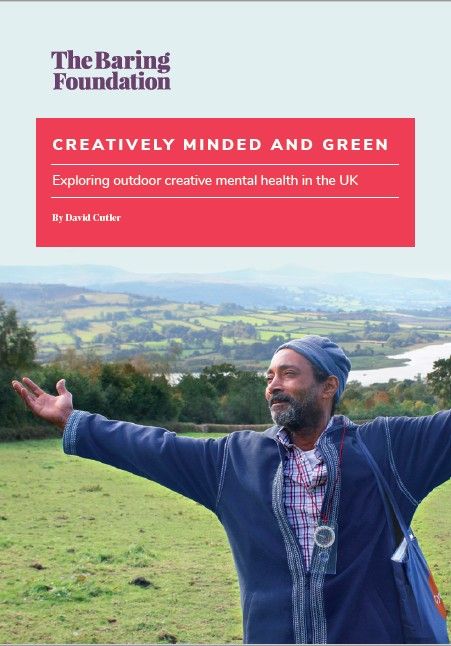
This report seeks to capture creative activity with, by and for, people with mental health problems taking place outdoors in nature.
At its heart are 18 self-reported case studies from England, Wales and Scotland. They cover multiple art forms and a wide variety of organisations taking the lead on organising the work. The case studies give both evidence and testimonies as to the impact of the work on participants.
The report concludes by offering some reflections based on these case studies.
- These projects normally entail several local partners from different sectors – environment, mental health and the arts, who come with different expertise, practices and expectations. They all need to be valued.
- The case studies show the appeal of combining the outdoors with creativity for participants – offering a wide range of mental, physical and social benefits.
- Although funding can come from a variety of funding sources, there is certainly a need for more, especially from health funders, including the NHS.
The case studies in the report offer only a snapshot of work taking place, so there is also a short directory of other work that we are aware of taking place in the UK, as well as a handful of international examples.
The featured organisations are:
- Amser I Siarad, North West Wales
- Artlift, Gloucestershire
- B.ARTS, Stoke-on-Trent
- Bradford 2025 UK City of Culture
- creativeShift, Bristol
- Fabrica, Brighton
- Ikon Gallery, Birmingham
- Impact Initiatives, Brighton
- Lapidus Scotland, Glasgow
- Lyth Arts Centre, Highlands
- Social Material, South West England
- Small Woods Association/Coed Lleol, Wales
- Swansea Bay University Health Board: Arts and Minds
- Well-City Salisbury
- Well Image, Devon
- West Kent Mind
- The Whitworth, Manchester
- ‘WOW’ Wales One World Choir, Cardiff