When we began our work on racial equity and the arts, our aim was clear: to support a cultural sector in which artists from racialised minority communities are better represented, and where communities that have too often been excluded are able to participate more fully in cultural life.
This work has become the largest single strand of the Baring Foundation’s Arts and Mental Health programme. It represents a significant long-term commitment to artists, organisations and communities working to address inequality, strengthen representation and create more inclusive cultural spaces in this sector.
Since 2020, we have made 38 grants through two open funding programmes. These grants have supported a wide range of organisations and artists, helping to develop creative practice, deepen community participation and explore the connections between culture, wellbeing and social justice. Across the programme, we have seen powerful examples of the arts creating space for connection, belonging, expression and collective healing.
Alongside this grant-making, we have invested in building skills and capacity within the sector. We funded two training programmes, one in Manchester and one in London, supporting practitioners and organisations committed to advancing racial equity in the creative mental health sector.
We have also recognised the importance of work with people who have sought refuge and safety in the UK. Counterpoints Arts has been funded twice through this programme, supporting its work championing the creativity, voices and experiences of refugees through the arts, and exploring how a focus on mental health can support people who often don’t have access to formal support. Here is an example of how resources are being generated through this funding.
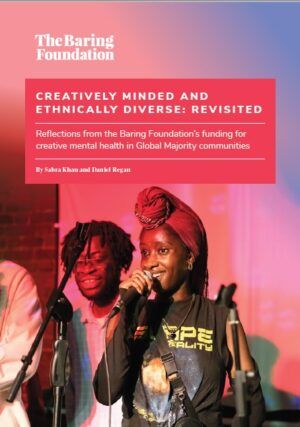
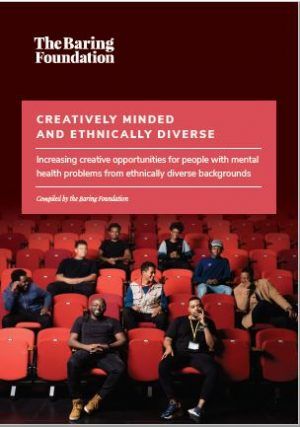
Learning and reflection have been central throughout. We have published two reports to share evidence, insight and learning with the wider sector. More recently, we held a conference in London, bringing together artists, practitioners, funders and partners to reflect on what has been achieved, what has been learned and what challenges remain.
We have now taken a further important step. Following a closed funding round for previous grantees, we have awarded ten long-term grants over five years, worth a total of £1.5 million. This was a highly competitive process where highly experienced organisations were applying and we regret that we could not afford to support all those bids. These grants are intended to offer stability and confidence, enabling organisations to plan for sustained impact over time. Meaningful change does not happen quickly, and long-term investment is essential if progress is to be embedded and lasting.
Here are the ten organisations we are funding: Akademi, Arts 2 Heal, Bethlem Gallery, Brixton House, Creative Future, East London Dance, Hear Me Out, Hospital Rooms, Raw Material Music & Media and Yaram Arts.
Taken together, this amounts to more than £3 million dedicated to increasing artist representation and community participation from racialised minority communities. Funding alone cannot resolve structural inequality, but it can help create the conditions in which talent is supported, new voices are heard and communities are able to shape cultural life on their own terms.
As Chair, I have been deeply encouraged by the ambition, creativity and resilience of the organisations, artists and leaders we have supported. Their work reminds us that racial equity is not a specialist concern or an optional addition. It is central to building a stronger, more representative and more inclusive cultural sector, both broadly and in arts and mental health. There is still much to do, but this programme shows our commitment to supporting sustained change.
We look forward to continuing this journey with our partners and to supporting the work that will help shape a more equitable future for the arts.
Photo: Raw Material’s RAW Sounds programme. Photo © Oliver McKenzie.