In 2025, the Baring Foundation gave British Ceramics Biennial (BCB) a small grant to research and deliver an event sharing best practice and inspire other opportunities for the use of ceramics in the context of addiction recovery.
BCB is a pioneer in this area, having delivered the ‘Recast’ ceramics project in partnership with Stoke Recovery Service since 2017. Recast offers eight-week blocks of workshops over the year, plus a four-day intensive residency, with participants supported by two artists, a recovery worker and sometimes an additional support artist.
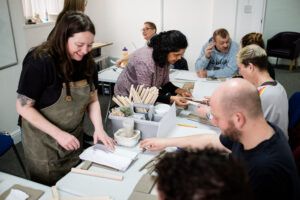
The Clay & Recovery Knowledge event took place in September 2025 in Stoke-on-Trent, bringing together people with an interest or experience of using clay as a creative medium within the context of addiction recovery.
A paper produced by Jo Mills, BCB’s Studio and Community Manager, uncovered a few projects around the UK working with people in recovery and/or with mental health problems and using clay, including the following.
These range from specialist pottery studios, to arts organisations with a strong ceramic offer, to one-off collaborations and projects.
Recovery through Ceramics – a collaborative programme between Shipley Art Gallery, Recovery Connections and Bensham Grove Pottery in Gateshead. Weekly sessions introduce participants to different techniques of making with clay, inspired by ceramics collections at the gallery, and working towards their own work for an exhibition. This project was nominated for a Museum Association Changing Lives Award.
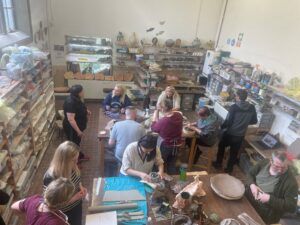
At the Anderson Green project at The Art House, Sheffield participants on their recovery journey are offered a free homemade meal and an art or pottery class. Participants are supported by Parish Nurses (employed by the church next door) and expert tutors from The Art House to engage in accessible clay-based activities. The project was started by Ted Green and Scott Anderson who both had experience of recovery themselves. Sessions are free to attend and subsidised by commercially priced arts courses also on site (a model for other providers?).
In Sunderland, PhD researcher Mary Watson has been working with the charity Veterans in Crisis to explore how creative clay practice can improve health, wellbeing and social isolation in the veteran community. Veterans in Clay met weekly to create, learn new skills and socialise.
Chilli Studios – the arts and mental health charity and studio in Newcastle-upon-Tyne, offers ceramics as part of a wide menu of creative activity.
In Nottinghamshire, the Harley Foundation has been working with Nottinghamshire Mind to run eight ten-week Creative Ceramics courses a year. These are co-led by a professional artist and a mental health professional from Mind.
Portraits of Recovery associate artist, Joe Hartley, used ceramics as part of a residency and collaboration with ANEW, a support organisation for people experiencing substance misuse and/or homelessness in Manchester. The resulting exhibition was called ANEW Way to Peel an Orange and hosted by the Castlefield Gallery.
And in Yorkshire, clients at Project 6, a drug and alcohol charity, have been working with Emilie Taylor, an art psychotherapist, researcher and artist on projects involving many art forms, including clay.
In her paper, Jo has also compiled a list of what you need to do this work well. She says:
- An invitation (people need to feel invited to participate)
- Space (enough room to make, store materials and dry work)
- Time (clay is both quick and slow. Quick in that you can see how it changes in your hands as you mould it, slow as you wait for it to dry, to be fired, and glazed).
- Experts (respecting the experience of all involved)
- Reflection (clay can be a challenging material, which can be part of its charm in scenarios where people are trying to rebuild their own resilience, but also requires letting go of control and allowing a sense of reconciliation if things don’t go according to plan)
- Funding (long-term funding allows for sustained engagement and a greater chance of deeper success through the regularity of sessions)
- Dissemination (events like exhibitions can help participants see themselves afresh, to be seen, acknowledged and for stigma to be challenged)
- Tea and biscuits!
To read Jo’s full paper, click here.
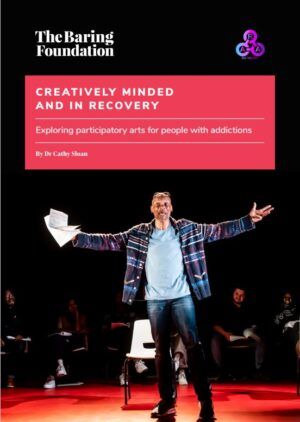
To read more about BCB’s project ‘Recast’ or the Bensham Pottery / Shipley Art Gallery project, both are featured in our 2025 publication, Creatively Minded and in Recovery.